From power to marginalisation: the role of the Zaidis in Yemen
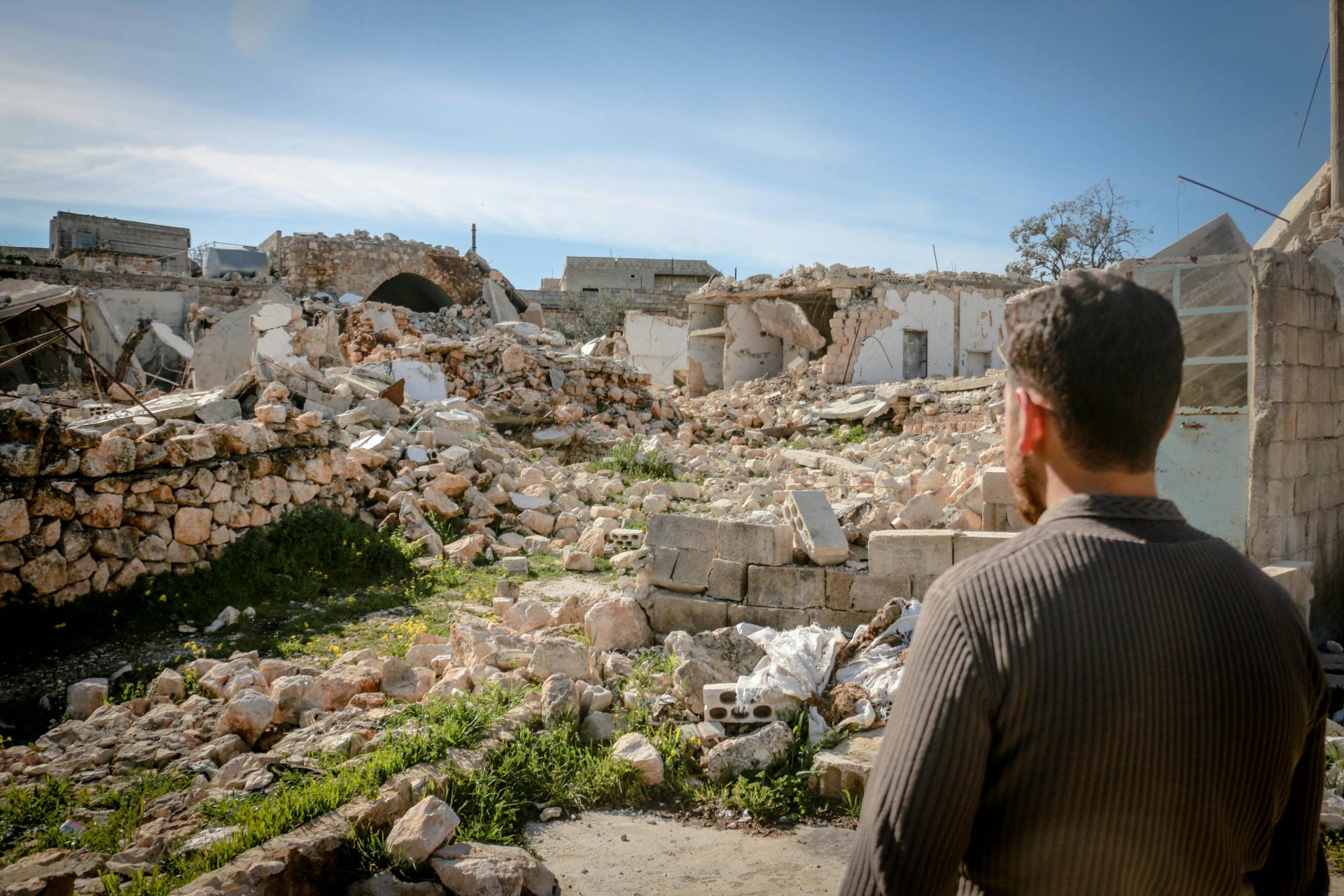
The Zaidis, once the dominant religious and political power in Yemen, turned into a marginalised minority after the 1962 revolution. Journalist Zayd Saba, himself of Zaidi descent, examines their intellectual legacy and their shift from rulers to oppressed. What does the Zaidis' rich past mean for their future in Yemen? And how do they relate to the Houthis, who stem from this movement?
As I look back on my beloved country, my family and the community I belong to, I feel a profound responsibility to write about the victims of the lack of a just state, a state where order, law and social equality are paramount. The victims include the Zaidi minority, to which I and my family belong.
I, along with my family and friends, experienced a frightening history as Zaidis. The most frightening was entering Salafist mosques, where we prayed differently, causing people to recognise us as Zaidis. This led to verbal and physical attacks and we were violently expelled.
Zaidi's in the past
My study into Zaidi thinking began in 2016, during my master's degree in Political Science at the University of Sana'a. On a cold January day, I had my first lecture in the subject “Islamic Political Theory”. We discussed the political theories of different Islamic schools of thought, including that of the Zaidi minority. Because of my background, this subject immediately caught my attention. Moreover, thanks to my Zaidi background, I gained access to the libraries of some Zaidi clerics and their ancient writings, which enriched my research.
A key conclusion from my study was the enormous ignorance and stereotyping that exists among both Arab and Western observers and journalists. They often describe Zaidism from political and sectarian prejudices, ignoring the rich intellectual tradition underlying it.
In AD 894, Imam al-Hadi introduced Zaidi thinking to Yemen. He settled in the northern city of Saada, where his intellectual views found fertile ground. Called Zaidi-Hadism, this movement ruled northern Yemen for more than a thousand years. For a long time, Zaidism formed the religious, legislative and cultural identity of Yemeni society, until its fall on 26 September 1962, following a tribal uprising supported by Egyptian leader Gamal Abdel Nasser.
The revolution turned the Zaidis into a persecuted minority. Their schools were almost all closed and replaced by Salafist institutions funded by Saudi Arabia and Qatar. Moreover, tens of thousands of families, including from Afghanistan and Chechnya, were sent to Zaidi areas, in a bid to limit Zaidi influence. As a result, Yemen became a battleground of intellectual and political transformations.
Reason over lore
The main feature of Zaidi thought is its emphasis on reason over lore. This promotes critical rational thinking, a philosophical approach later adopted by the small but influential group of Mu'tazilites. This tradition of flexibility means that texts and interpretations can be adapted to time and context. This makes Zaidism unique from other Islamic movements, which often place more emphasis on adherence to doctrines.
Zaidism is also distinguished by its non-expansionist nature. It does not seek to increase the number of followers or subjugate others to its faith, but functions more as a political resistance movement. Rebellion against tyranny, both political and religious, is a fundamental characteristic of the Zaidis.
In this regard, the idea that Zaidis are Shias is a widespread misconception. While there are some similarities, such as descent from the Prophet Muhammad and emphasis on the role of his descendants in the Islamic state, the Zaidis differ from Shias in many fundamental ways. They do not believe in the 12 imams - the descendants of Muhammad - as infallible, God-chosen leaders. And within Zaidism, there is no basis for expanding the religious community, which is the case with Shias.
Houthis and the Zaidis
The Houthi movement, founded in 1992, is seen by many as a reaction to the decades-long persecution of the Zaidis. Starting in 1990, a small group of Zaidis stepped forward with a new, political idea. This became the Houthi movement, which used Zaidi identity as a tool to exert control over marginalised Zaidi communities. In the process, the Houthis deviated from the original Zaidi doctrine and faced strong opposition from religious Zaidi leaders.
Although the Houthis originally emerged from Zaidi thought, they have developed into a movement with its own ideology, which differs in many ways from traditional Zaidism. Although the Houthis cooperate politically and militarily with Iran (Shia), there is no religious alliance. The Zaidi ethnic group is tolerated by the Houthis, while members in the south are persecuted and killed under government rule. Thousands of Zaidi members have been imprisoned and their activities closely monitored.
Decades of persecution and marginalisation have made the future of Yemen's Zaidi community extremely bleak. However, if their unique intellectual and religious traditions are respected, the community can help build a peaceful and inclusive society. The Zaidis believe in a society based on equality, justice and democracy. Yemen's future depends on its ability to revalue this rich tradition and integrate it into a modern, just state.
Photo: Pexels

Rate this article
You read this article for free. Do you think the article and our efforts are worthwhile? Then you can show your appreciation by making a contribution. This way, you help our journalists and RFG Media.
About the author

Read more
 From Amsterdam to Macondo. On the true magic of Colombia
 Bab el-Mandeb between Tehran and the Houthis: the power to disrupt rather than control
 Between two homes