Press freedom in Russia reaches new low
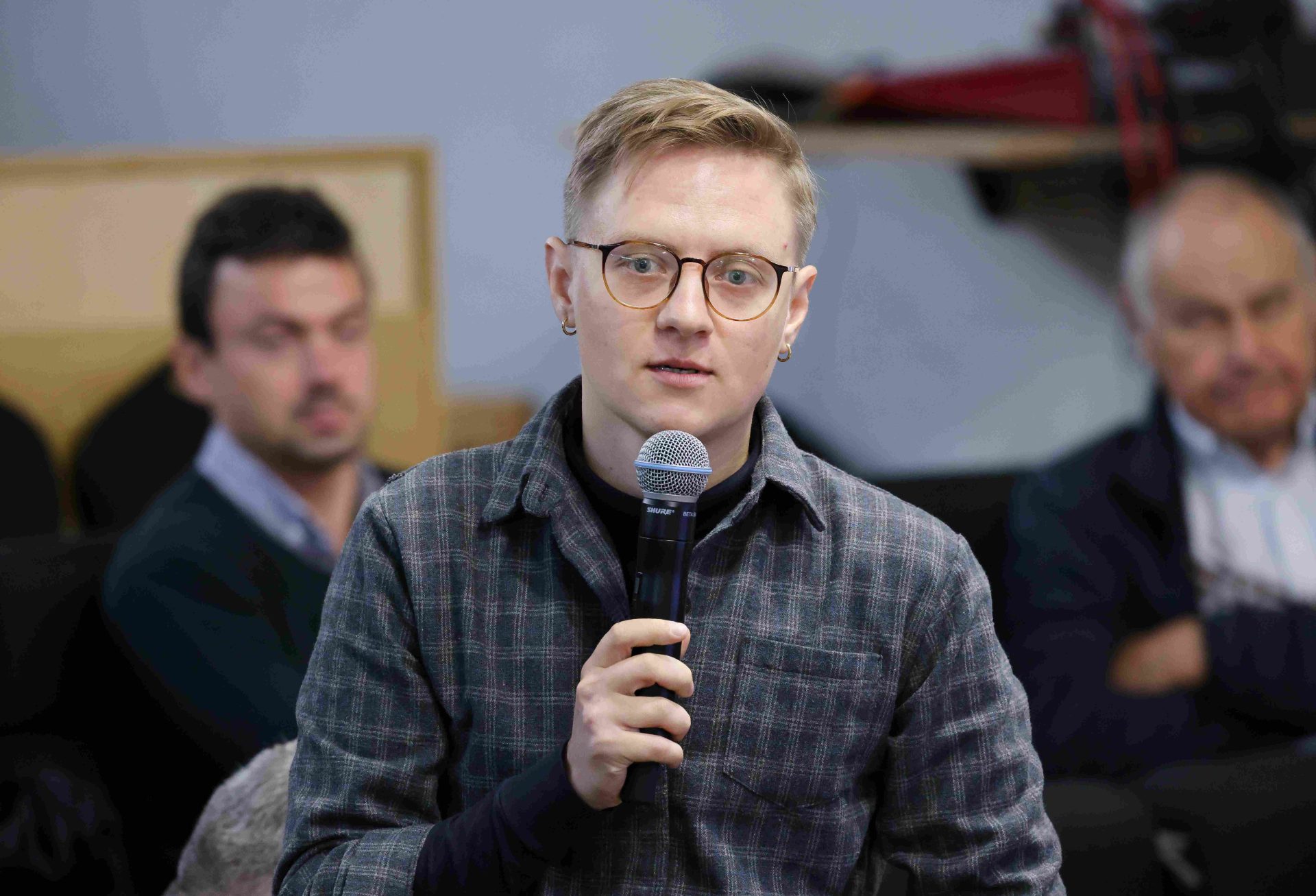
Sergei Gorbunov at a conference
Journalist Sergei Gorbunov left Russia three years ago because of his fear of political persecution. Now he sees how propaganda has overcome freedom of speech and all critical voices have been stifled.
Against the backdrop of recent events such as the death of Alexei Navalny and Putin's ‘re-election’, Russian press freedom is in dire straits. According to experts and journalists in Russia, freedom of expression has come under increasing pressure since the March elections. The election result could be the death knell for independent journalism, if it functioned at all. For instance, in two years of war with Ukraine, Russia has fallen seven places in the annual press freedom index published by Reporters Without Borders; it now ranks 162nd out of 180. Immediately after the presidential election this year, Russian authorities began arresting foreign journalists, who were previously considered untouchable. Journalists from Forbes, Associated Press and Deutsche Welle were arrested. According to human rights activists from OVD-Info, more than 66,061 internet publications have been blocked and 1152 journalists prosecuted since the start of the war with Ukraine.
Television and online media
Only pro-Putin news will be disseminated in all media. Independent television was already done away with by the Russian government in early 2000, quickly followed by radio broadcasters. The last independent newspaper, Novaya Gazeta, barely lasted six months after the start of the war in Ukraine, even though its editor-in-chief had received the Nobel Peace Prize a year earlier. Russians also had to say goodbye to Facebook, Instagram and Twitter in 2022. Independent journalists, activists, politicians and even ordinary citizens were given ‘foreign agent’ status, officially banning them from working with them. Even before the re-election, Putin announced a new battle, this time against VPN services, which can be used to bypass Russia's restricted internet traffic. Immediately afterwards, critical bloggers were targeted, by treating them as foreign agents and banning them from placing ads in their videos, depriving them of their income.
Many Russian journalists now work from abroad. According to RFI data in December 2023, between 1,500 and 1,800 journalists have left the country. Most media in exile are blocked or labelled as undesirable on Russian territory, and mention of them can lead to criminal prosecution. In May 2023, for instance, the first case was filed for reposting a news article by the medium Meduza, which was labelled ‘undesirable’. Despite the risks, ordinary Russians can still access independent media in exile through platforms like Telegram or YouTube, but every day the risk of repression increases. By threatening readers and viewers of independent media, the state hopes to reduce their numbers. Russian media abroad must constantly observe security measures. Amsterdam-based independent TV channel TV-Rain, for instance, has even stopped collecting donations from viewers in Russia to protect their donors.
This article previously appeared in 360 Magazine. It was produced in collaboration with Free Press Unlimited.

Rate this article
You read this article for free. Do you think the article and our efforts are worthwhile? Then you can show your appreciation by making a contribution. This way, you help our journalists and RFG Media.
About the author

About the author
Sergei Gorbunov
Sergei Gorbunov (born 1988) is a journalist, political scientist and editor at Russian-language media in exile. He holds a master's degree in political science (2019). He left Russia in 2021 due to political persecution.
More in this file
 Metin Cihan's resistance on social media
 Wider margins for press freedom in Syria
 ‘Any report I make could mean a lawsuit against me’